About Silver Bullion
Legal & Non-Legal Tender - Reporting
Requirements - Premiums Explained
Most everyone knows something about
silver bullion coins and silver bullion bars. But the
number of these products available today may cause even
the experienced investor to pause. And then the
consideration as to where to buy and sell silver bullion
products at the right price requires consideration. The
good news is that most silver bullion is similar in
nature, meaning it moves up or down daily with the price
of silver, buy and sell prices are easy to understand,
and all silver bullion coins and bars are very liquid.
Real silver bullion is easy to buy and sell, but Uncle
Sam does watch some transactions closer than others so
read on before making your choice and be sure to look
closely at our List
of Reportable Silver Bullion Transactions.
The precious metals are measured by the
Troy ounce (31.10 grams), as opposed to your bathroom or
postal scale weight which is called Avoirdupois weight.
An Avoirdupois ounce is 28.35 grams. The Troy ounce is
about 10% heavier than Avoirdupois. 14.58 troy ounces =
16 postal scale ounces. This weight component is
important to note, especially for beginners, because
investment in silver requires a bullion product with low
premiums so investment in certified silver coins, for
example, belongs on the rare coin side of the ledger and
has nothing to do with bullion gains or losses.
All real bullion products move directly
with the New York Commodity Exchange, which opens for
trading at 5:30 AM and closes at 10:30 AM California
time. After the COMEX is closed the price of these coins
usually remain constant until the beginning of the next
trading day. On occasion, however there is an aftermarket
which may move physical prices either higher or lower.
A simple definition of any silver bullion
coin or bar is one in which there is little premium above
the content or weight value of the product. In other
words you are buying only the commodity itself, you are
not buying rarity. Coins or bars like these will increase
in value if world markets go up and will decrease in
value if world markets go down. This happens because
bullion manufacturers produce large numbers of each thus
eliminating the notion of rarity and in the case of
earlier (1964 or earlier) US silver coins the numbers
still outstanding are so large they too have no rarity
and therefore their price is an excellent approximation
of their silver weight.
So what is the difference between a
bullion silver coin, a bar of silver and the familar 90%
silver bullion bag? In the early days of bullion trading
all of these were pretty much the same when comparing
ounce to ounce values. That was because the interest in
silver investing had not developed into what we see
today. But as more people became interested in owning
silver bullion, and trading volume increased
dramatically, and important differences became apparent.
The Three Important Components
Of Today's Silver Price
1. The most obvious place to begin is the
daily paper price of silver on the Comex (spot) and an
awaremess of any aftermarket. An aftermarket does not
change the spot price but could change the physical
product price. This happens because bullion dealers
remain open after the Comex paper close and in conducting
business my reflect rising or falling demand between
themselves. Most of the time the consumer need not be
concerned because these changes are small, perhaps a few
cents in one direction or another, but during market
stress an aftermarket is a consideration.
2. Next, and very important consideration
is actual availability of the physical product you want.
The manufacturing of some silver bullion products can be
erratic even with solid public demand. The US Mint, for
example, may decide to stop Silver Eagle production
because of other priorities. When they work out their
production problems the Mint will begin producing the
Silver Eagle but this delay could last months and during
this time a premium may develop which may add several
dollars to the ounce price. The important point here is
that lack of availability and increased demand always
lead to increased premiums over what a silver bullion
product should cost under normal circumstances.
3. Unless you are a purist, paying
increased premiums does not make sense because they
always move lower as new production enters the
marketplace. Your best move is to compare relative
premiums between similar bullion products and choose the
bullion product with the lowest premium. You may be
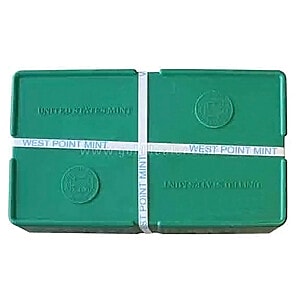
looking for a box of US Silver Eagles (500 count) and
decide the premium on 90% bags is much lower, and
therefore a better investment choice. This is true
because you could be getting 10% or even 20% more silver
bullion per dollar invested, which could translate into
much higher profits if the market moves in your favor.
This interactive chart shows the price of
silver per ounce, historically. Please allow a minute to
load.
Silver Chart courtesy of: http://www.24hgold.com/
See The Silver Institute
for information on silver, including charts and
statistics.
LEGAL TENDER SILVER BULLION COINS
Silver Bullion Prices
| $1000 Face Value 90%
Silver Bag |
| A popular way of owning
silver bullion is in the form of $1000
face value U.S. silver coins struck in
1964 or before.These fall into the
general catagory of Legal Tender
silver bullion, which has a specific
definition in that Legal Tender is
actually real money and can be minted
only by sovereign governments. Bags weigh
about 54 pounds and are sometimes called
"junk" silver bags which is
misleading. This unfortunate name was
developed in the 1970s and used to
describe a bag of average circulated
silver coins which did not contain
anything that was rare or collectable.
These bags contain $1000 face so if half
dollars were used there would be 2,000
coins. If the bag contained quarters the
count would be 4,000 coins. If the bag
contained dimes there would be 10,000
coins. If a bag were melted it would
contain about 715 oz. of pure silver but
this is seldom done because the silver
coins themselves are worth a premium. All
silver coins struck in 1964 or sooner are
90% pure so bags will move up or down
with the daily price of silver. If you
want a handy way to approximate bag price
changes, either up or down, figure a
commercial 90% bag will move about 7
dollars for every one cent change in the
daily paper market. For your convenience
we divide a bag into two units of $500
face each which makes for easier handling
and storage. Most of the time the
selling price of these bags simply
reflect their silver content, but because
old silver coins are no longer being
produced there may be other
considerations as well. If demand for
this particular silver product increases
the price over their normal silver value
could develop. Premiums also develop
because survivalists, who want only U.S.
silver coins for barter, insist on this
form of silver bullion. The premium on
90% silver bags can vary from negative
(trading for less than content) to as
much as 30% over their actual silver
weight because of changes in public
demand. The difference between the buy
and sell is fairly constant and there are
investors who buy bags when premiums are
cheap or negative and trade them for 100
oz. bars when premiums increase
substantially, thus increasing their net
silver bullion position without
additional charges. Some investors look
particularly for silver legal tender
coins because they believe that sooner or
later this type of money will replace
currency in circulation today. Some folks
think this idea is silly but like the
notion of having real US silver coins
because they are easily indentified.
Either way, 90% silver bags are popular
and make up a large percertage of silver
bullion holdings today.
Dealers are required by law to report
your sale of $1000 face 90% bags on
I.R.S. Form 1099B. Smaller quantities of
90% are not reportable by the buying
dealer.
|
| |
Gross
Weight
|
Fineness
|
Silver
Content
|
Price
|
 |
54 pounds
|
0.900
|
715 Troy Oz.
|
Price
|
| $1000
Face Value Bag of Silver Dollars |
| This interesting play in
silver is not exactly a bullion
investment but it is not a rare coin
investment either. Circulated silver
dollars struck between 1878 and 1935
carry higher premiums, yet they are a
prime source of legal tender silver coins
because they are so recognizable. These
early dollars are divided into two price
categories. The more expensive Morgan
dollar struck between 1878 and 1904,
worth between $10 and $25 dollars
depending on the price of silver and the
coin's condition. And the Peace dollar
struck between 1921 and 1935, worth
between $10 and $20, again depending on
the price of silver and the coin's
condition. There are better or key-date
Morgan and Peace dollars which are worth
more, sometimes substantially more but in
9 out of 10 cases most dates and mint
marks from this era are common and
readily trade within the quoted dollars
areas. Both the Morgan and Peace
silver dollars can be bought or sold by
the bag (meaning a thousand silver
dollars) but such bags should be
carefully discribed as to the condition
of the coins in each. Most commercial
bags contain coins which are VG (Very
Good) or better so when examined you will
see only normal wear. They do not contain
coins which have been excessively cleaned
or are damanged, sometimes called
"cull" examples. These options
are popular because silver dollar bags
have represented real, portable wealth
for more than 100 years. But because of
the collector premium circulated silver
dollars may not be your best choice when
it come to a pure bullion investment. It
is possible that because even circulated
silver dollars cost much more than their
silver content an investor making this
choice could see Comex silver advance 30%
and still not be in a profit position
just because of the extra collector value
he paid. Also note that real silver
dollars like these only contain about 3/4
of an ounce of pure silver so do the math
before making this choice and calling it
a "bullion investment". A
better way to describe circulated silver
dollars is "semi-numismatic"
meaning not really bullion but not really
rare.
|
| $1000 Face Value 40%
Silver Bag |
| The last silver coin the
United States made for general
circulation was the 40% silver clad 50¢
struck from 1965 through 1969. This is
another popular way to own silver bullion
in legal tender form. Like circulated 90%
coins these $1000 face bags are traded
primarily for content. Because they are
40% pure a bag contains substantially
less silver (296 troy oz.) which is
reflected in a lower selling price. The
buyer has a number of advantages. First
these are real U.S. coins and therefore
are legal tender (real money) of our
nation so in an emergency this could be a
significant. Second, the bag has a high
face value ($1000) which limits the money
anyone could lose should silver move
lower. This is easily seen in a down
market because premiums almost always
move higher. And finally, unlike 90%
silver bags, dealers are not required to
fill out I.R.S. Form 1099B on 40% bags
when you sell. The one disadvantage is
that because the coins are 40% silver it
takes a larger storage area versus other
forms of silver bullion. If you are
talking about a bag or two this is not a
big deal, but if you are a big player the
storage factor should be considered.
|
| |
Gross
Weight
|
Fineness
|
Silver
Content
|
Price
|
 |
50 pounds
|
0.400
|
296 Troy Oz.
|
Price
|
| United
States Silver Eagle - US Legal Tender |
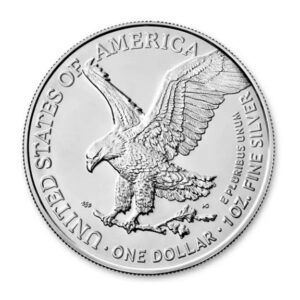
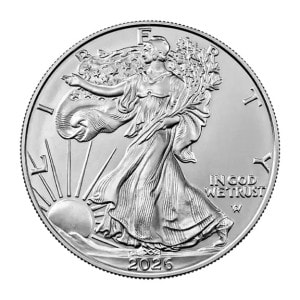
| This popular silver
bullion product has been produced by the United
States Mint since 1986. It contains 1
oz. of pure silver, and actually
represents $1 in legal tender, meaning
real currency like a paper dollar. Now no
person is going to spend this coin for a
dollars worth of gas, because the coin's
silver content is higher. This guarantee,
however, backed by the US government
provides an added plus with some
investors. The Mint produces these coins
each year and their price fluctuates
directly with silver but because
production can be interrupted by the US
Mint this bullion product can develop a
large premium over melt when production
is down and lose that premium when
production is up. It makes for good
investment sense to check premiums
carefully before purchase and if they are
very high consider a lower premium
bullion product. The big advantage in
these silver bullion coins is they have
complete worldwide recognition because
they are produced and promoted by the US
Mint. |
| |
Gross Weight
|
Fineness
|
Silver Content
|
Diameter
|
Thickness
|
Price
|
One Ounce US
Silver Eagles
Box of 500
 |
41 Pounds
|
0.999
|
500.00 Troy ounces
15551.5 grams
|
|
|
Price |
One Ounce US
Silver Eagles
Lot of 100
 |
8 pounds
|
0.999
|
100.00 Troy ounces
3110.3 grams
|
|
|
Price |
One Ounce US Silver
Eagles available in BU (Bullion) and
Proof (Collectible)
 |
1.00 Troy ounce
31.072 grams
|
0.999
|
1.00 Troy ounces
31.103 grams
|
1.598"
40.60 mm
|
0.117"
2.96 mm
|
|
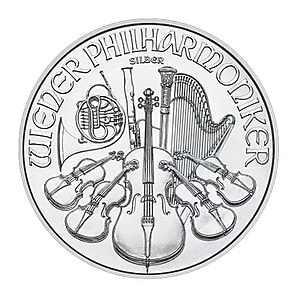
| Austrian Silver
Philharmonic |
| These beautiful silver
bullion coins come in sealed mint boxes
of 500 coins similar to the US Silver
Eagles Green Monster Box. They are first
rate in every respect and often sell a
lower premiums than the Silver Eagle so
consider them if you are looking for a
great silver bullion investment without
the extra cost of the US Silver Eagle.
Recommended. |
| |
Gross Weight |
Fineness |
Silver Content |
Diameter |
Thickness |
Price |
 |
1.00 Troy Ounces
31.072 grams
|
0.999
|
1.00 Troy Ounces
31.103 grams
|
37 mm
|
2 mm
|
Price
|
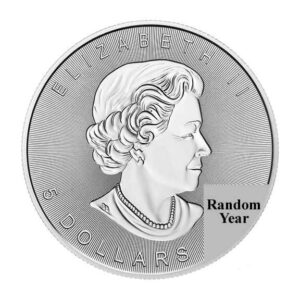
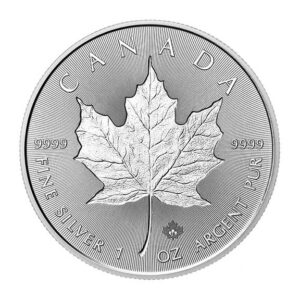
| Canadian
Silver Maple Leaf |
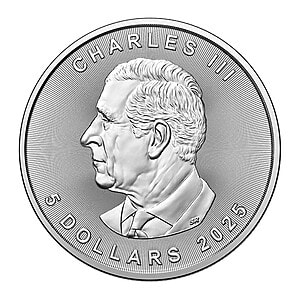
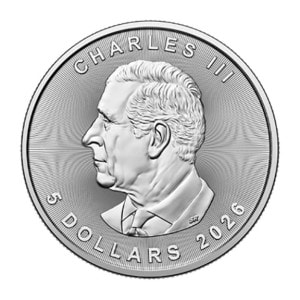
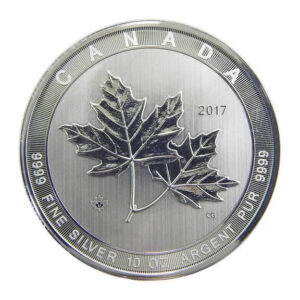
| The Royal Canadian Mint's
Silver Maple Leaf 1 oz. silver bullion
coin is also one of the great silver
bullion products on the market today, and
because it is produced by the Canadian
governement is recognized and traded
worldwide. These bullion coins also come
in sealed mint boxes of 500 coins and
also make a first rate silver bullion
investment. Recommended. |
| |
Gross Weight |
Fineness |
Silver Content |
Diameter |
Thickness |
Price |
One Ounce Silver
Maple Leafs
Box of 500
|
37 pounds
|
0.9999
|
500.00 Troy Ounces
15551.5 grams
|
|
|
Price |
One Ounce Silver
Maple Leafs
Lot of 100 with
tubes. 
|
8 pounds
|
0.9999
|
100.00 Troy Ounces
3110.3 grams
|
|
|
Price |
One Ounce Silver Maple
Leaf
 |
1.00 Troy Ounces
31.072 grams
|
0.9999
|
1.00 Troy Ounces
31.103 grams
|
38 mm
|
2.87 mm
|
|
|
NON-LEGAL
TENDER SILVER BULLION
Silver Bullion Prices
COMEX
Bar approximately 1000 oz. 0.999 Fine
|
| New York
Commodity Exchange (COMEX) and Royal
Canadian Mint (RCM) are rough looking
bars which vary in size and are traded
using the exact stamped weight. All buy
or sell spot prices are multiplied by the
actual bar weight. This is a great way to
puchase silver as premiums are always low
on these bars, but their weight (65
pounds) is a big disadvantage as moving
is very difficult. Most investors are
willing to give up the few cents saved
for easier portability and the fact that
smaller units provide choices as to how
much one can sell at any given time,
still large bars are a popular way to own
silver bullion. Also note that while we
say approximately 1000 ounces, Comex bars
are stamped with an exact weight but for
some strange reason these weights vary
from bar to bar an ounce or two, so the
amount you pay per ounce is the same but
the total will be adjusted to the
specific bar weight in each case. We
are required by law to report your sale
of any 1000 oz. COMEX bar.
|
| |
Gross Weight |
Fineness |
Silver Content |
Dimensions |
Price |
 |
65 pounds
|
0.999
|
Approx. 1000 Troy
Oz.
|
Approx. 15" x
6" x 4"
|
Price
|
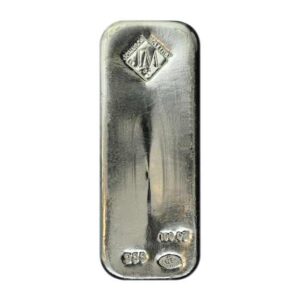
| 100 oz.
Silver Bar |
| The 100 oz. bar has been
one of the most popular ways to own
bullion silver for decades. Its size is
convenient and purity (0.999 Fine) easily
understood. All bullion bars fall into
the general catagory of Non-Legal Tender
silver bullion because they are produced
by private firms. For years the two most
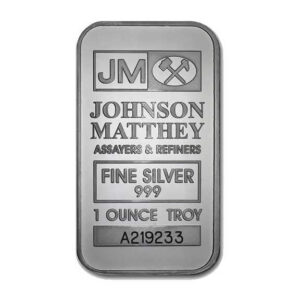
accepted 100 oz. bars were produced by Johnson and Matthey
(J.M.) and Engelhard but
production delays allowed other good
manufactures to increase market share so
today there are many quality bars like
Academy and others trade worldwide and
have consistent pricing and
acceptability. All these bars weigh 6.8
pounds, are easily identified, and easily
moved. We are required by law to
report your sale of 10 or more 100 oz.
silver bars on I.R.S. Form 1099B.
|
| |
Gross Weight
|
Fineness
|
Silver
Content
|
Dimensions
|
Price
|
Johnson Matthey Brand
|
100 Troy Ounces
|
0.999
|
100 Troy Ounces
|
Approx. 6" x
2" x 1.5"
|
Price
|
Engelhard Brand
|
100 Troy Ounces
|
0.999
|
100 Troy Ounces
|
Approx. 5.5" x
2.5" x 1"
|
Price
|
Academy Brand
 |
100 Troy Ounces
|
0.999
|
100 Troy Ounces
|
Approx. 5.5" x
2.5" x 1"
|
Price
|
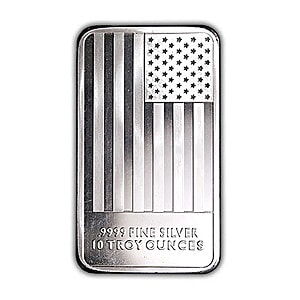
| 1 oz.
& 10 oz. Silver Bar |
| Finally, and equally
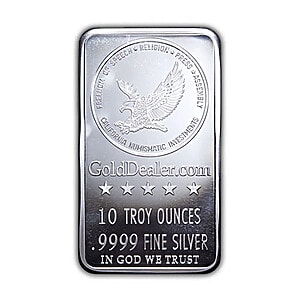
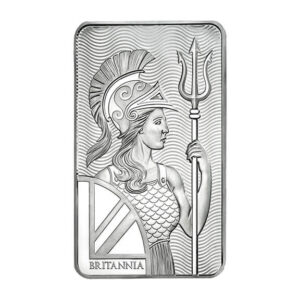
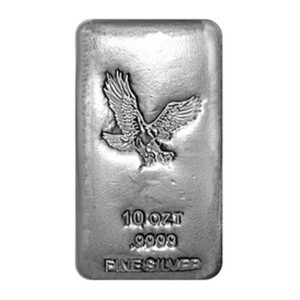
popular are these 0.999 fine smaller 1
oz. and 10 oz. units. In each case the
two so called "generic" rounds
or bars trade worldwide and can be bought
or sold in virtually any quantity. They
do, however, cost slightly more than 100
oz. bars but are easier to handle and
popular with investors who want the
ability to sell or buy smaller quantites
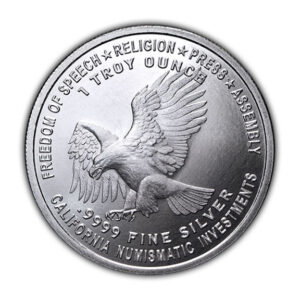
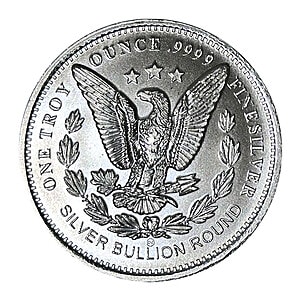
at any given time. The 1 oz. silver piece
is actually produced in the shape of a
coin instead of a bar because they are
easily stored in plastic tubes, thus the
name 1 oz. silver rounds. They are
produced by a variety of excellent
private mints and thus have many
different pictures and symbols on the
front and back. All, however, are clearly
identified as to weight and content.
These smaller units are very popular with
those investors who want them for
potential barter purposes. |
| |
Gross Weight
|
Fineness
|
Silver Content
|
Dimensions
|
Price
|

Sample image. Actual item may look
different. |
1 troy oz.
|
0.999
|
1.00
Troy Oz.
|
Varies,
approximately 44 mm (1.6 inches)
|
Price
|

Sample image. Actual item may look
different. |
10 troy oz.
|
0.999
|
10
Troy Oz.
|
Varies,
approximately 3" x 2" x
0.25"
|
Price
|
|
|